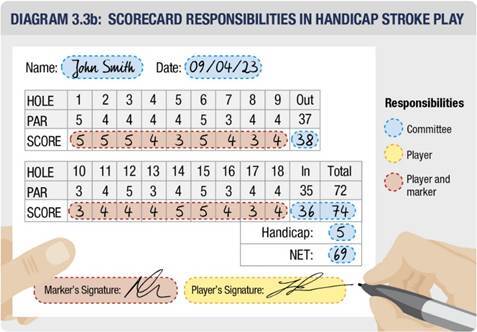

When you're playing in a tournament and assigned as another player's marker at the start of a round, you aren't just doing them a favor. You're taking on one of the most important responsibilities in the game.
In stroke play, every competitor depends on the players in their group to keep the competition fair. That's why Rule 3.3b of the Rules of Golf outlines the responsibilities of both the player and the marker. Keeping an accurate scorecard isn't just the right thing to do—it's part of the Rules.
Whether you're playing your first Junior Golf Circuit event or your 20th, learning to be a great marker is part of becoming a great golfer.
What Does a Marker Do?
As a marker, your primary job is simple: Record your fellow competitor's score accurately on every hole.
That means confirming the player's score after each hole—including any penalty strokes—and writing the correct final score on the scorecard. Make sure you don't rely on your memory until the end of the round. The best markers develop a routine of confirming scores before leaving each green or on the next tee.
A simple conversation can prevent costly mistakes.
"You made a five?"
"Yes, five."
Then, simply write it down.
It is recommended to confirm scores with the number of strokes you took rather than just saying par or bogey. Sometimes we can forget what the par of the hole is and write down the incorrect score.
Just as importantly, if something doesn't seem right, speak up during the round. If you believe a player may have forgotten a stroke or a penalty, ask about it respectfully right away.
Waiting until the ride home to mention it to a parent doesn't help resolve the situation or protect the rest of the field. Most scoring mistakes are honest mistakes that can be cleared up with a quick conversation, and if there is still uncertainty, a Rules Official or member of the Committee is there to help. If the issue is not resolved on the course, be sure to bring it up in the scoring area to a member of the Committee.
Your Signature Means Something
At the end of the round, you'll sign the scorecard to certify the hole scores. Your signature is a promise that you've done your best to ensure the scores are accurate.
Rule 3.3b even states that if a player serving as a marker knowingly certifies a wrong score, that marker should be disqualified under Rule 1.2a, which covers serious misconduct and acting contrary to the spirit of the game.
That's how seriously golf takes honesty.
The player Has Responsibilities, Too
Being a good marker doesn't mean you're responsible for everything. The player also has important duties under Rule 3.3b. Before returning the scorecard, the player must:
- Review every hole score carefully.
- Make sure the marker has signed the card.
- Sign the scorecard themselves.
- Return it promptly to the Committee.
If there's a disagreement about a score, don't guess or argue. Ask a Rules Official or member of the Committee before the scorecard is returned.
Once a scorecard has been returned, changing scores is often not possible.
Tips for Being a Great Marker
The best markers all have a few habits in common:
- Confirm the player's score after every hole.
- Include any penalty strokes when recording the score.
- Write scores clearly and legibly.
- Stay organized—don't wait several holes to fill in the card.
- If something doesn't seem right, ask questions immediately.
- Before signing, review every hole with the player one last time.
These simple habits help everyone in the group avoid unnecessary scoring issues.